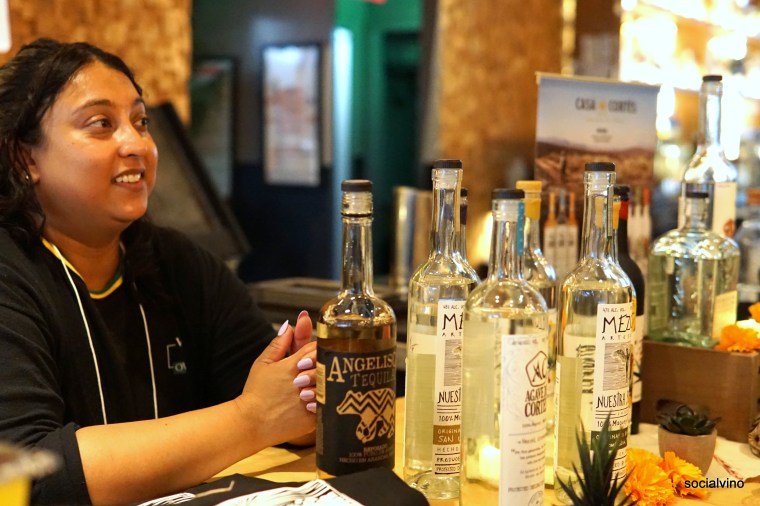
On November 3rd I attended the Mujeres del Mezcal mezcal spirit tasting which was held at Mamazul Mexican Grill located at 1155 Broadway in Manhattan.
The “Women of Mezcal” tasting was promoted by Panorama Mezcal as a way to showcase women in the mezcal spirit industry. There were over 60 mezcal producers on hand with a handful of tequila producers as well. The event was open to the consumer.
Mezcal is a spirit produced in Mexico similar to tequila and all tequilas are mezcal but not all mezcals are tequila.
Simply, the differences between the two are that tequila must be made from the Blue Agave while mezcal can be made from any of the dozens of varieties of agave. The piña for tequila is steamed while the piña for mezcal is roasted in pits which gives it a smoky flavor. Tequila has to come from specific areas of Mexico while mezcal can come from any part the country.
While tequila can be a more consistent product, you can sit down for a tasting of a dozen mezcal from the same producer and have twelve different spirits made from different agaves and villages.
I’m more of a brown spirits drinker so most of the labels at this tasting were unfamiliar to me, especially the mezcals since most tend to come from small producers. Since all the producers poured more than one spirit, I stopped at each table to try at least one version of what they were pouring.
Skurnick Wine & Spirits which was established in 1987 is one of the local distributors of wines and spirits in the New York area. In the three-tier system we have in New York State, businesses have to buy their spirits from a third party, a distributor.
On April 2nd they held an event for members of the trade that showcased their rum, tequila and mezcal portfolio. The event was held at Ixta restaurant at 299 Bowery in lower Manhattan.
If was the perfect event to attend on a rainy afternoon. At the tasting, I would say that about three quarters of the spirits were Tequila and Mezcal with the rest dedicated to Rum.
I appreciated that all of the Tequila and Mezcal producers at the tasting were from small, artisanal distillers with limited production as opposed to the Corporate, mass-produced spirits that are usually found on bar shelves in the city.
Something out of the ordinary from Mexico was eau de vie from Endenico, made from tropical fruits, and a liquor from Alamatepec made with Pasilla Mixe chiles.
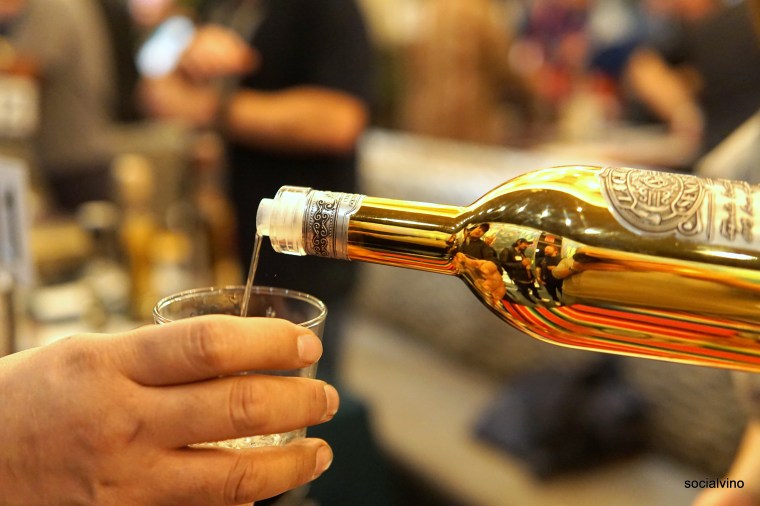
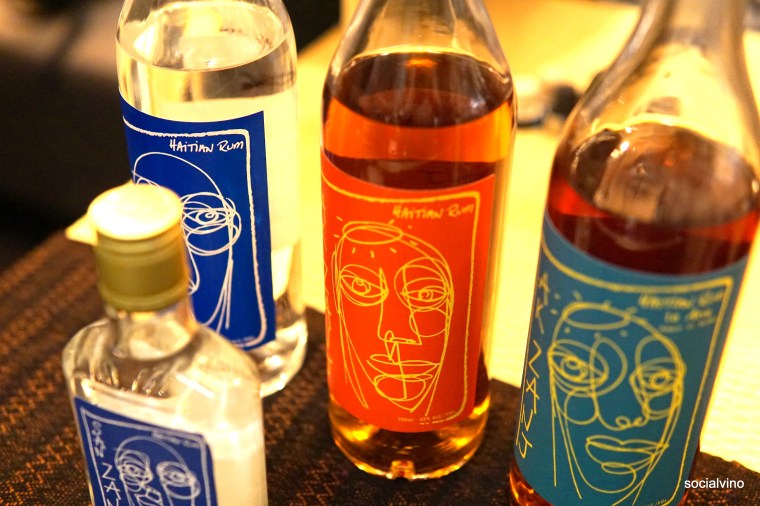
The rum selection was not as extensive as the spirits from Mexico but they poured an excellent selection of rums. One of my favorite Agricole rum producers, Rhum J.R., had some new products added to their portfolio of rums, which were Fume Volcanique, Terroir Volcanique and Jardin Fruite. Producer Ak Zani poured some very excellent Haitian rum which had a cool artistic label on the bottle.
On Saturday afternoon February 29th, Jimmy Carbone’s Food Karma Projects, a producer of food and craft beverage events, held the first ever Bowl of ‘Zole pozole festival. The event was held at Bibi restaurant at 110 Kent Avenue in Williamsburg, Brooklyn.
The event brought together 10 chefs who cooked their versions of Pozole for people to sample and to accompany all that were 50 different Mezcal from 20+ producers.
Pozole is a traditional Mexican soup (stew), associated with special occasions, festivals and family. Traditionally made with pork and hominy, it comes in three versions, blanco (white), rojo (red), and verde (green). It’s Mexican comfort food, something that grandma would cook for you.
Mezcal is an alcoholic spirit from Mexico made from the agave plant. It is similar to tequila and while technically all tequila are mezcal, not all mezcal are tequila. Tequila must use a single varietal of agave (blue agave) and be made in the state of Jalisco, while Mezcal can be made using up to 28 different varieties of agave and mostly produced around the city of Oaxaca put produced in other States as well. With tequila the agave heads are baked in above ground ovens while in Mezcal the agave is cooked in the traditional method in pits dug into the ground. Cooking in those in-ground pits is what gives the Mezcal its smoky flavor profile. The permitted use of many types of agave and wider geographic production area results in a greater variety of styles of the spirit than in tequila. Many are still made in the traditional method at small production family run operations which means that with the exception of a small handful of labels, many of the brands are not widely distributed and were not familiar to me.
I have to admit that this was the first time I had a comprehensive tasting of Pozole as it’s an under the radar Mexican food choice. They are traditionally made with pork but there were versions made with chicken and seafood as well. I was able to sample the different versions of the stew and it was the perfect food choice to have on a chilly Winter Saturday afternoon.
Some of the Pozole I sampled:
La Esquina chef Gonzalo Rivera: Vuelve a la Vida Pozole, Maine lobster, mussels, clams, organic hominy, fennel, toasted sesame, & chile de arbol oil, smoky hoja santa broth.
Balvanera chef Fernando Navas: Pozole rojo with radishes, avocado and fresh oregano.
Bacado chef Ivy Stark: Pozole rojo with braised short rib.
Hotel Indigo chef Chai Trivedi Kitsch: Rojo, matzo ball Pozole.
Mesa Coyoacan chef Ivan Garcia: Shredded pork, hominy, guajillo, ancho chile broth, radish, oregano.
Toloache chef Julian Medina: Pozole verde, heirloom hominy, green curry, coconut milk broth, thai basi, lemongrass, salsa macha, been sprouts.
While Mezcal can be made from several types of agave, the “workhorse” is the Espadin varietal and many of the spirits on hand were made from that type of agave. I tried to sample as many made from agave other than Espadin.
Mexico In A Bottle is a website founded in 2014 by Susan Coss and Max Garrone that celebrates “food, art, mezcal, life”. They sponsor North America’s biggest agave spirit tasting, an annual tasting and celebration of more than 500 years of Mezcal history and culture. In 2018 the tour has stopped and will stop in Washington DC, San Diego, Chicago and San Francisco and on September 16th, Mexican Independence Day, the tour stopped in New York City.
The event took place at the House of Yes, a nightclub, performing arts space and event venue located at 2 Wychoff Avenue in Bushwick, Brooklyn. Over 50 brands were represented and considering that Mezcal, unlike Tequila which can be made with only with blue agave, Mezcal can be made from up to 30 varieties of agave which means that many producers make a wide range of Mezcal from different varietals as well as from different villages. There were a staggering quantity of spirits at this event. .
I recognized a handful of producers but for the most part many of the producers were “mom and pop” operations that still make Mezcal in the traditional way and most of the labels were unknown to me. Most had the signature smokiness that Mezcal are known for but many had more nuanced flavors of grass, herbs, butter, stone fruit. I would have loved to pick two or three producers and go through their line to taste the differences in the types of agave used. Personally, unlike rum, I like my Mezcal/Tequila joven, clear instead of aged. Interesting food item at the event were crispy Chapulin (aka grasshopper).
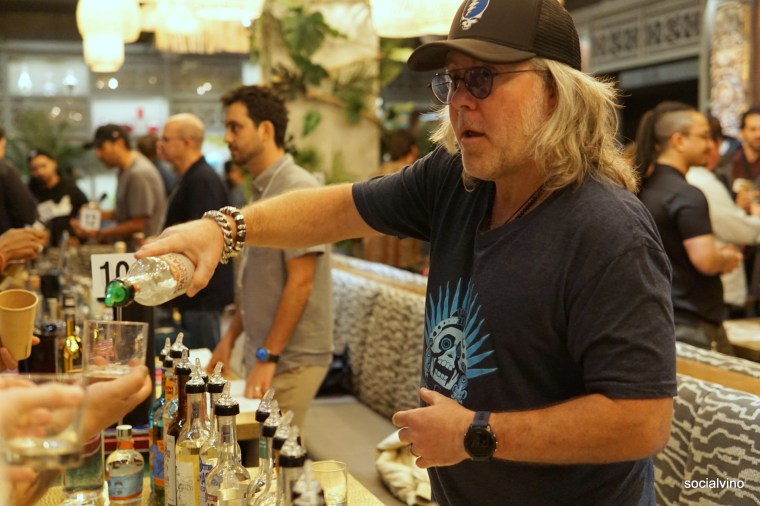
On Sunday evening August 20th I attended a Mezcal night party. The event was held at Salvation Taco, a restaurant in the Pod 39 hotel located at 145 East 39th Street in Manhattan.
The event was a benefit for El Rosario A. C. library in Santa Catarina Minas in Oaxaca, Mexico and was a walk around tasting of over 50 mescal from 16 of the top producers.
I have to admit that before attending this party my knowledge of mezcal was very limited. I always thought that mescal was the tequila wannabe with the worm in the bottle. I learned that much mescal is made from small, family run producers using traditional methods.
To put it simply, all tequila are mezcal but not all mezcal are tequila. Tequila must be made from the Blue Agave while mezcal can be made from many varieties (over 30, many of them wild) of the agave plant. Tequila is site specific while mezcal can be legally made anywhere in Mexico though most come from Oaxaca. In tequila the agave are baked in a stone oven while in mezcal the agave are slow roasted in pits lined with volcanic rock which give it its signature smokiness.
On a bottle of artisanal Mezcal you should find information about he village, state and type of agave used in the production stated on the label. In addition, numbers on the label (2, 3, 4 etc.) show the age of the agave plant when it was harvested.
There were an overwhelming amount of spirits poured, I would have like to sit down with a couple of producers and have a horizontal tasting but in the spirit of the walk-around tasting I sampled many.








 SocialVino