




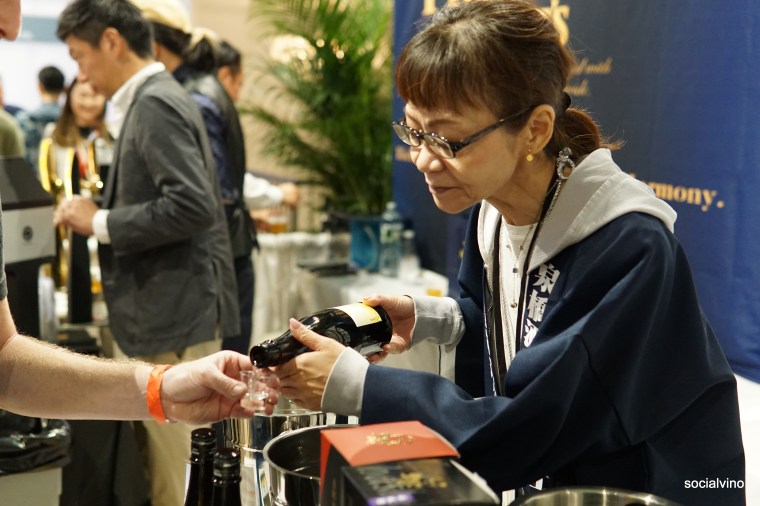


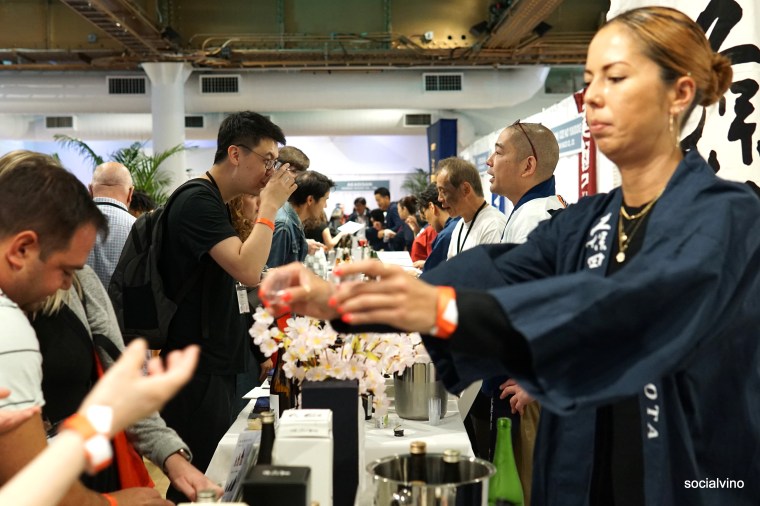

On September 13th I attended the Japanese Food & Restaurant Expo. It was sponsored by the New York Mutual Trading Company which has been providing Japanese restaurant supplies since 1926.
It was a huge event since it was held at both the Metropolitan Pavilion and the next-door Altman Building which are a much-used event spaces on West 18th Street in Manhattan.
The Metropolitan Pavillion was dedicated to food products used in Japanese cooking and the second floor held scores of Japanese knives for sale.
The Altman Pavillion part of the expo was where the spirits were poured. Those included Sake, Shochu, Japanese beer and Japanese whisky.
I have to admit that Sake and Shochu aren’t my go-to spirit when I want an alcoholic beverage, but I will drink them on occasion.
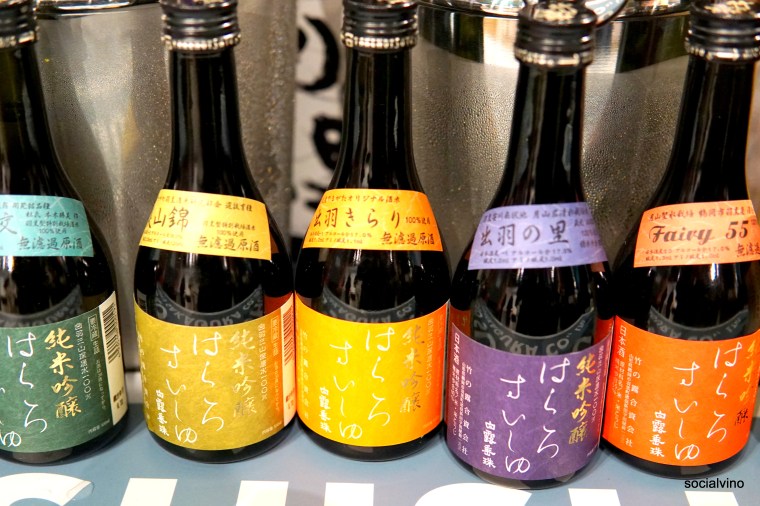
Sake is fermented beverage made with rice and koji (which is a beneficial fungus). It’s classified under four categories, Junmai, Ginjo, Tokubetsu and Daiginjo that depend on what percent of the rice grain is polished. Alcohol levels come in at about the same levels as a beer.
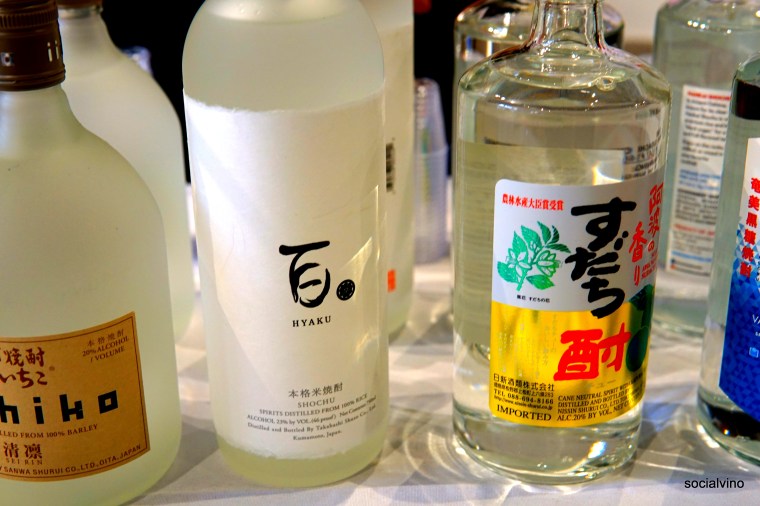
Shochu is a distilled spirit made from grains and the koji fungus which breaks down the starches to sugar. Alcohol levels are a bit higher than Sake, coming in at around the levels of a sherry.
The only producer at the tasting I was familiar with was Asahi beer, other than that I had no clue who was what, so I sampled from what I thought was an interesting bottle.
On of those interesting bottles was a couple of sake from Niwa Nouguisu which was a white one and a pink one. The sake was thick and cloudy, and I was told because that’s how unfiltered sake look like. They tasted chewy and chalky.
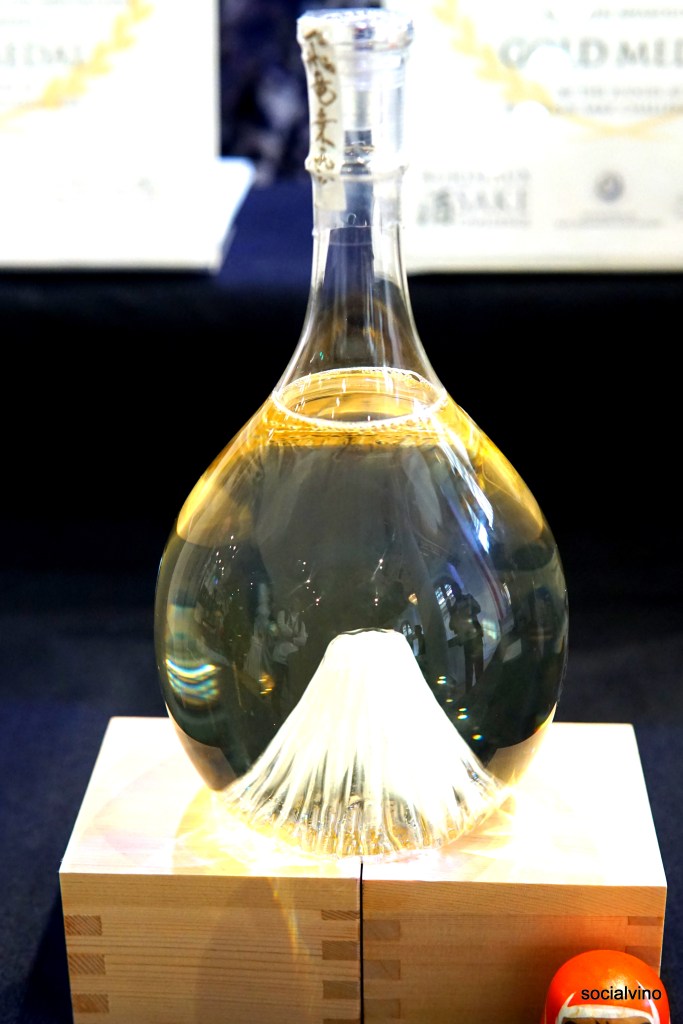
Another interesting and beautiful bottle was from Hiryujouun. The sake was bottled in a clear, handcrafted bottle with a representation of Mount Fuji in the bottle with edible gold powder floating around that represented snow falling on the mountain.
And another interesting bottle was shochu from Dotton which was aged for 20 years.
 SocialVino