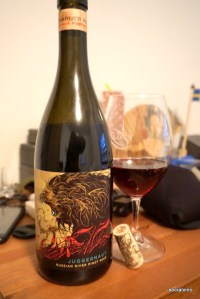
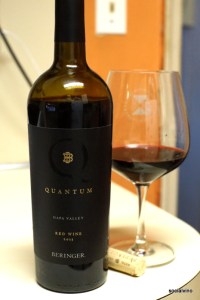
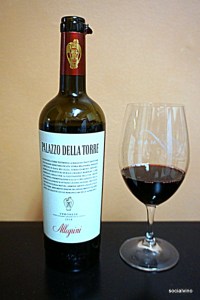
Cabernet Franc is one of the major red varietals of the world and the parent grape to Cabernet Sauvignon and Merlot. It is medium bodied with medium to high acidity and in its historical home, France, it is one of the grapes used in the classic Bordeaux blend and the primary red grape in the Loire region. It’s also a major grape varietal in both the Finger Lakes and Long Island wine regions of New York State.
Out in the Long Island wine region, the early (than Cabernet Sauvignon and Merlot) ripening grape was thought to be a perfect fit for the cooler climate on the North Fork. It hasn’t dethroned Merlot as the primary grape varietal but most wineries grow it either for blending or bottling on its own.
On a quiet Sunday afternoon I took a drive to wine country to sample a few.
Roanoke Vineyards Tasting Room 165 Love Lane, Mattituck
This is their satellite tasting room as the tasting room at the winery is now members only. On a two block long commercial area with a cheese shop next door and an Italian deli across the street.
2016 Cabernet Franc: “The Twelve Rows”: 98% Cabernet Franc from the site specific Twelve Rows block. Cloudy medium purple with a purple rim, camphor, crushed red fruit, licorice and dark chocolate on the nose, bright dark fruit with raspberry notes on the crisp finish.
Bedell Cellars 36225 Main Road, Cutchogue
A family owned operation with vines planted in 1980 using sustainable farming and “artistic blending”.
2017 Cabernet Franc:From estate grown grapes fermented with indigenous yeasts, opaque black with a purple rim, cooked berries, raspberry and mike chocolate on the nose, bright red fruit with firm acidity, I thought the finish dropped a bit at the end.
Paumanok Vineyards 1074 Main Road, Aquabogue
Founded in 1983 and entirely owned and managed by Ursula and Charles Massoud, the tasting room is in a turn of the century renovated barn.
2016 Cabernet Franc:100% Cabernet Franc, opaque dark red, purple rim, slate, crushed rocks and wet dirt on the nose, bright red cherry fruit with wet earth notes on the fruit, low tannin, firm acidity, on the light side.
Cochon 555 is a “nose to tail” culinary event that covers nine cities on its U.S. tour. The organization was created in 2008 with a mission to support family farms and to educate buyers about heritage breed pigs. The signature event featured 5 chefs, 5 pigs, 5 winemakers in a friendly competition for a cause where the winner is crowned “Princess/Prince of Pork”. Sommeliers were on hand for a to pour wines and to participate in a Somm Smackdown.
The New York City leg of their tour was held on March 8th at the Altman Building event venue at 135 West 18th Street in Manhattan. The venue is a landmark building dating from 1896 and was the carriage house for the B. Altman department store.
This was one of the last events I was able to attend before the virus lockdown and fortunately it was one of those consumer events that had a good crowd enjoying a good mix of food, spirits and wine. They had oysters, cheese and steak tartare for those who were pork adverse though it seemed they didn’t get the logistics of the new venue down right, some of the lines for food were way too long and that was before general admittance was let in. But with a couple of floors of food, drink and music people were enjoying what was probably the last party that were able to attend.
This year was the 20th anniversary of La Paulée de New York which was held from March 4-7. The week included seminars, tastings and some very expensive dinners. The Grand Tasting was held on Saturday afternoon at the Pier Sixty event venue located at 60 Chelsea Piers on the far west side of Manhattan overlooking the Hudson river.
In the U. S., the festival alternates between New York City and San Francisco and showcases the latest vintage of the Burgundian wines to be released. At the Grand Tasting on Saturday afternoon over 50 wine professionals were on hand to serve the wines from over 40 domains of Burgundy. A team of top-notch chefs prepared “petits plats” for guests to nosh on while they sampled the various wines. Members of the Confrerie des Chevaliers du Tastvin were on hand to serenade (a capella style) the wine drinkers.
The event is Restaurateur and Sommelier Daniel Johnson’s homage to the annual La Paulée de Meursault in Burgundy. That originally began as a end of harvest festival thrown by the Burgundian growers for their guests and field workers and was revived in the early twentieth century as an annual event for the growers and their guests.
The 2017 vintage was a much better year for Burgundy than Bordeaux. The later suffered through epic frost while Burgundy was able haul in the biggest crop since 2009.
This was one of those tastings that I could have spent 2-3 days tasting through all the wines. There were over 150 of some of the most famous (and expensive) wines in the world to taste. I really enjoyed the whites, in general they were very elegant and balanced wines with just enough of the tropical fruit and oak notes to make them interesting. The reds were light in color with restrained fruit and firm acids, very old world style.
Puligny Montrachet 1er Cru Les Perrieres: Light gold, nose of fresh herbs, moderate fruit with a firm but juicy finish.
Bienvenues Bâtard Montrachet: Light gold, spicy cinnamon on the nose, moderate fruit with a firm, balanced finish.
Domaine Roulot
Meursault “A Mon Plasir” Clos du Haut Tesson: Light gold with tropical notes on the nose, earthy, tart fruit, good balance.
Domaine Bernard Moreau
Chassagne Montrachet: Light gold, tropical nose, dusty, tropical notes on the fruit, nice balance.
Chassagne Montrachet 1er Cru Vergers: Light gold, rosemary and tropical fruit on the nose, moderate fruit, pineapple, firm and balanced finish.
Chassagne Montrachet 1er Cru Morgeot: Medium to light gold, cinnamon and tropical fruit notes on the nose, fruit forward, drops at the end.
Pierre-Yves Colin-Morey
Corton Charlemagne Grand Cru: Light gold, tropical fruit and cinnamon on the nose, minerally with crisp acids at the end.
Bâtard Montrachet Grand Cru: Medium gold, tropical fruits and cinnamon on the nose with tropical fruit notes and lemon on the long finish.
Olivier Laflaive
Chassagne Montrachet 1er Cru Abbaye de Morgeot: Medium gold, spicy tropical fruit on the nose with tropical fruit notes on the nice balance.
Meursault 1er Cru Blagny Sous le Dos d’Ane: Medium gold, toasty nose, lemon tart fruit with a firm finish.
Bouchard Pere & Fils
Chevalier Montrachet Grand Cru: Medium gold, mashed peaches on the nose, moderate peachy fruit, great balance.
Beaune 1er Cru Vigne de L’Enfant Jesus: Light brick, red leather on the nose, green herb notes on the balanced and long finish.
Joseph Drouhin
Beaune 1er Cru Clos des Mouches Blanc: Light gold, toasted pineapple on the nose, moderate tropical fruit with oak notes, nice finish.
Beaune 1er Cru Clos des Mouches Rouge: Clear light red, pretty perfume of spicy berries, silky fruit with a nice balance.
Clos de Vougeot Grand Cru: Clear light red, spicy perfume with oak notes on the light fruit.
Domaine Genot-Boulanger
Meursault 1er Cru Les Boucheres: Light gold, spicy tropical fruit on the nose, spicy, juicy fruit, long finish.
Domaine de Montille
Meursault 1er Cru Les Poruzots: : Light gold, green herbs and tropical fruit on the nose, juicy fruit with lime notes, good balance.
Corton-Charlemagne Grand Cru: Light gold, toast and tropical fruit on the nose, toasty lime fruit, crisp finish.
Beaune 1er Cru Les Sizies: Light red, red leather nose, silky red fruit and red leather notes on the firm finish.
Louis Jadot
Corton-Charlemagne Grand Cru: Medium gold, sweet candy and toast on the nose, juicy with a firm finish.
Beaune 1er Cru Aux Cras: Light red, roasted earth on the nose, dusty, juicy fruit with firm acids at the finish.
Domaine Yvon Clerget
Clos Vougeot Grand Cru: Light to medium red, floral nose with sweet fruit and a tight finish.
Domaine Nicolas Rossignol
Volnay: Light purple, dried leaves on the nose, crushed rock on the fruit, good grip.
Domaine Jean Grivot
Nuits Saint Georges 1er Cru Ronciere: Light brick, dried herbs on the nose, medium body fruit with good balance and a long finish.
Domaine Hudelot-Baillet
Chambolle Musigny Vielles Vignes: Clear medium red, black licorice on the nose, juicy fruit with a nice balance.
Chambolle Musigny 1er Cru Les Cras: Clear medium red, toasty tar on the nose, silky fruit and nicely balance.
Bonnes Mares Grand Cru: Clearmedium red, tarry black fruit on the nose with silky red fruit and a firm balanced finish.
Domaine Comte Georges de Vogue
Chambolle Musigny Vielles Vignes: Clear medium red, sweet perfume of strawberries with a tight and silky finish.
Chambolle Musigny 1er Cru: Clear medium purple, pretty nose of sweet, dried herbs, juicy red leather on the fruit, nice balance.
Bonnes Mares Grand Cru: Medium brick, red leather and herbs on the nose, silky red fruit on the firm and balance finish.
Domaine Dujac
Morey Saint Denis: Light red, red leather nose with moderate juicy fruit, balanced.
Clos de la Roche Grand Cru: Light red, dried herbs on the nose, dusty red fruit with firm, mouth watering tannins at the finish.
Domaine Duroché
Gevrey Chambertin 1er Cru Lavaut St Jacques: Clear light purple, damp earth and rosemary on the nose with strawberry notes on the fruit ending with firm acidity.
Echezeaux Grand Cru: Clear light red, strawberry and earth on the nose, red cherry fruit with rosemary notes on the finish.
Domaine Jean-Marie Fourrier
Gevrey Chambertin 1er Cru Cherbaudes: Light clear red, earth and herbs on the nose, silky finish with some heat at the end.
On Saturday afternoon February 29th, Jimmy Carbone’s Food Karma Projects, a producer of food and craft beverage events, held the first ever Bowl of ‘Zole pozole festival. The event was held at Bibi restaurant at 110 Kent Avenue in Williamsburg, Brooklyn.
The event brought together 10 chefs who cooked their versions of Pozole for people to sample and to accompany all that were 50 different Mezcal from 20+ producers.
Pozole is a traditional Mexican soup (stew), associated with special occasions, festivals and family. Traditionally made with pork and hominy, it comes in three versions, blanco (white), rojo (red), and verde (green). It’s Mexican comfort food, something that grandma would cook for you.
Mezcal is an alcoholic spirit from Mexico made from the agave plant. It is similar to tequila and while technically all tequila are mezcal, not all mezcal are tequila. Tequila must use a single varietal of agave (blue agave) and be made in the state of Jalisco, while Mezcal can be made using up to 28 different varieties of agave and mostly produced around the city of Oaxaca put produced in other States as well. With tequila the agave heads are baked in above ground ovens while in Mezcal the agave is cooked in the traditional method in pits dug into the ground. Cooking in those in-ground pits is what gives the Mezcal its smoky flavor profile. The permitted use of many types of agave and wider geographic production area results in a greater variety of styles of the spirit than in tequila. Many are still made in the traditional method at small production family run operations which means that with the exception of a small handful of labels, many of the brands are not widely distributed and were not familiar to me.
I have to admit that this was the first time I had a comprehensive tasting of Pozole as it’s an under the radar Mexican food choice. They are traditionally made with pork but there were versions made with chicken and seafood as well. I was able to sample the different versions of the stew and it was the perfect food choice to have on a chilly Winter Saturday afternoon.
Some of the Pozole I sampled:
La Esquina chef Gonzalo Rivera: Vuelve a la Vida Pozole, Maine lobster, mussels, clams, organic hominy, fennel, toasted sesame, & chile de arbol oil, smoky hoja santa broth.
Balvanera chef Fernando Navas: Pozole rojo with radishes, avocado and fresh oregano.
Bacado chef Ivy Stark: Pozole rojo with braised short rib.
Hotel Indigo chef Chai Trivedi Kitsch: Rojo, matzo ball Pozole.
Mesa Coyoacan chef Ivan Garcia: Shredded pork, hominy, guajillo, ancho chile broth, radish, oregano.
Toloache chef Julian Medina: Pozole verde, heirloom hominy, green curry, coconut milk broth, thai basi, lemongrass, salsa macha, been sprouts.
While Mezcal can be made from several types of agave, the “workhorse” is the Espadin varietal and many of the spirits on hand were made from that type of agave. I tried to sample as many made from agave other than Espadin.
New York City Beer Week began on Saturday, February 22nd. It was the start of 10 days of craft beer events with beer tastings, beer themed food pairings and seminars throughout the city.
The beer week kicked off with the Opening Bash on Saturday afternoon and evening. That event was held at the Brooklyn Expo Center, an event venue at 72 Noble Street in Greenpoint, Brooklyn. It’s becoming a popular spot for hosting beer/wine/spirit events.
The opening bash was sponsored by the New York City Brewers Guild whose mission is to advance New York City’s brewing industry and thereby “lessen human misery”.
It was a huge event with 75+ breweries from New York City, New York State and from around the country pouring their beer to sample with all styles represented. There was even a brewery on hand from Sweden.
At the end of the nineteenth and beginning of the twentieth centuries, there were so many breweries in New York that New York State was the largest grower of hops in the country. Prohibition brought that all to an end. The last couple of decades has seen a resurgence for the beer industry in New York City and Data from the State Liquor Authority (2018) had 41 breweries throughout the five boroughs.
With such a massive amount of beer to sample, I focused my efforts on sampling any beer that was out of the ordinary. For the most part on that night that meant sampling sour beers which were usually infused with all sorts of fruits and botanicals, and any beer that was aged in various barrels which included wine, whiskey and rum barrels. For a change of pace I sampled stouts which themselves were flavored with coffee, chocolate, coconut and vanilla to name a few of the ingredients used. Surprisingly, I could only find one cider company in the house.
Some of what sampled:
Mikkeller: “Jammy Buggers” fruited sour ale.
KCBC:“Cosmic Zombie” barrel aged fruited sour ale with coffee.
Hops & Props was a beer festival that was held on February 8th. The event took place at the Cradle of Aviation Museum which is located on Charles Lindberg Boulevard in Garden City, Long Island.
The event featured 100+ craft beer and cider scattered throughout the galleries of the museum.
The Cradle of Aviation Museum is dedicated to the history of flight with galleries showcasing exhibits from the first hot air balloons to the space program. The museum houses many restored World War II fighter planes as well as an authentic Apollo-era lunar module. That lunar module was built by the Grumman Corp. which is based in nearby Bethpage and was scheduled to fly to the moon on the Apollo 18 mission. That mission was cancelled and the craft is now on exhibit in the museum. It was a cool venue to have a beer fest.
The museum sits on the Hempstead plains, a flat and treeless (at the beginning of the 20th century at least) part of central Nassau county on Long Island which made it a natural airfield. At the dawn of the aviation age, many flight schools and flying clubs made their homes in the area. Charles Lindbergh’s took off on his famous 1927 transatlantic flight from nearby Roosevelt Field which is now a shopping mall.
I go to a lot of wine/spirit/cocktail events and I have different expectations for every event I go to. There are the events that are geared for industry professionals and non industry enthusiasts. They usually serve the higher end and eclectic spirits. Many are open to consumers and spirit neophytes and those tend to focus on quantity more than quality. But they are a good way for the neophyte to learn more about wine ands spirits and they usually make for a fun party. I’ve had my expectations met, I’ve had them exceeded and sometimes the event did not live up to my expectations.
I recently attended an event that was more the latter than the former. It was a “Best Of” beer and food event in Brooklyn. Buying a ticket gained you entrance into a spartan, bare bones industrial floor space with a handful of beer vendors and food vendors that you had to purchase food to sample. It didn’t keep my interest peaked for too long and I spent less time at the event than on the commute to get there.
Fortunately the event was held at Industry City located at 36th Street in Sunset Park, Brooklyn. Industry Center is a complex of commercial buildings dating from the 1890’s that has been repurposed as a retail and commercial space. You can easily spend that day shopping, eating and drinking and when the weather is nice, relaxing in the outdoor spaces. It’s also home to breweries and distilleries.
The Craft New York Act of 2014 eased the regulations for opening a brewery or distillery in New York State which has resulted in a boom of those businesses in the state especially if they use local agriculture to make their products. Distilleries and Breweries have opened once again in New York City.
In Industry City if you walk over to building 5/6 you’ll find a few and since I didn’t spend too much time at the beer and food event, I stopped by a couple to sample a few spirits.
Standard Wormwood Distillery
This distillery produces sprits and liquors using New York State grown ingredients particularly wormwood as a base. Wormwood was a formally banned ingredient traditionally use in the production of Absinthe. I had a flight of spirits/liquor which included a Rye, an Agave, an Amaro, an Apertivo and a Wermut (vermouth).
Brooklyn Kura
This is the State’s first Sake brewery. They make several craft Sake and serve them on tap in their minimalist tasting room complete with a view of the brewing vats in the background.
I had a glass of the Bluedoor Junmai which was described as “umani laden, rich, clean”.
Oldies Bar
Next door to the Sake bar, they have the largest selection of New York spirits in the city, in fact those are the only spirits they are allowed to serve. I had a craft old fashioned.
This past Saturday on January 25th I attended the New York Wine Festival. It was a consumer event with tasting sessions in the afternoon and in the evening. I attended in the evening. The event was held at The Tunnel event venue at 269 11th Avenue on the west side of Manhattan.
These bi-yearly wine festivals are run by the same company at venues in Brooklyn and Manhattan. They are more or less cookie-cuter versions of each other with the same food and wine vendors in attendance. They’re not events for hardcore wine and spirit drinkers but rather events for wine and spirit neophytes who are looking to sample something new while socializing in a party atmosphere.
They poured a wide selection of wines from Italy, France, Spain, South Africa and the United States. Local wines from New York State were represented by RooftopReds, an urban winery based in the Brooklyn Navy Yard using New York State fruit and by Pumphouse Wines which poured locally produced red, white and rosé on tap.
The Union des Grands Crus de Bordeaux is a trade organization that promotes the Grand Cru wines of Bordeaux, France. At the beginning of each year they sponsor a world-wide tour where they showcase the current vintage that is being released. The U.S. and Canadian portion of the tour will make stops in Toronto, Montreal, San Francisco, Los Angeles, Chicago and Washington DC and on January 20th, the tour arrived in New York City. The event as usual, was held at Cipriani restaurant at 110 East 42nd Street in midtown Manhattan across the street from Grand Central Terminal. It’s the former Bowery Savings Bank which was constructed at a time when banks were built to be opulent places of commerce. A trade tasting was held in the afternoon and Sotheby’s auction house held a tasting for consumers at the same venue in the evening.
The 2017 vintage in Bordeaux was not the best of vintages. It was the “year of the frost” where the worst frost in living memory created conditions that had yields coming in at about 40% lower than the previous year. There were fewer wineries attending this tasting than there were in previous years as many wineries did not make a wine or made very little wine from the 2017 vintage.
In tasting through the wines, no one would confuse them for the lush and fruit forward wines of a Napa Valley Cabernet. In general for this vintage, I was finding a lot of lean red fruit with red cherry aromas and bitter cherry flavors on the finish. Many, not surprisingly for young wines, were hard edged, but many had low tannins and acids. I was not getting the type of concentration in these wines that I had gotten from the 2015 or 2016 vintages. I think these will be wines to be drunk in the short term.
Vintage 2017
Pessac-Leognan
Chateau Haut-Bailly: Clear medium red, toasty nose, tight with big tannins at the end.
Saint-Emilion
Chateau Canon-La-Gaffeliere: Opaque medium to dark red, pretty nose of black fruit and graphite, dusty red cherry fruit with firm tannins.
Chateau Canon: Clear medium red, cooked fruit notes on the nose, tight with crisp acids and firm tannins.
Clos Fourtet: Opaque dark red, crushed black fruit on the nose, juicy, graphite black fruit ending with a firm, silky finish.
Chateau Larcis Ducasse: Opaque medium red, sweet red cherry on the nose, moderate silky and dusty fruit with moderate tannins and acids at the end.
Chateau Pavie Macquin: Cloudy dark red, crushed black fruit and mint on the nose, tight red cherry fruit with tongue coating tannins at the end.
Chateau Villemaurine: Medium clear red, floral black cherry on the nose, bright dark fruit with a bitter cherry finish.
Pomerol
Chateau La Cabanne: Clear medium brick, dark chocolate on the nose, juicy red fruit with silky tannins and firm acids.
Chateau Clinet: Clear light amber, red cherry graphite on the nose, tight, silky tannin on the firm finish.
Chateau Gazin:Clear medium red with some tar and earth on the nose, tight, red cherry fruit, low acids.
Haut-Medoc
Chateau Cantemerle: Opaque medium red, graphite notes on the nose, tight red fruit with big tannins and acids on the finish.
Chateau Citran: Opaque medium red, candy red cherry on the nose with juicy red fruit and moderate acids.
Chateau Coufran:Medium to light brick, sweet red cherry on the nose, light black fruit with a chewy finish and moderate tannins.
Chateau La Lagune: Opaque medium red, dusty red leather on the nose, tight fruit with bitter red cherry at the end.
Margaux
Chateau Giscours: Medium to brick in color, toast and wet earth on the nose, moderate chewy fruit with dark chocolate on the finish, nice balance.
Chateau Kirwan: Clear medium red, crushed black fruit and some earth on the nose with bright red fruit ending with moderate tannins and acids.
Chateau Rauzan-Gassies: Clear medium red, crushed black fruit on the nose, chewy, toasty red cherry fruit with a firm finish.
Chateau du Tertre:Opaque medium red, toasty dark chocolate on the nose, bright dark fruit, firm finish.
Saint-Julien
Chateau Beychevelle:Medium purple, green olives on the nose, light fruit with olive notes, balanced finish.
Chateau Branaire-Ducru:Clear medium red, toast and graphite on the nose, light fruit with a bitter cherry finish.
Chateau Lagrange: Clear medium red, minty nose, dusty dark chocolate fruit with crisp acids.
Chateau Leoville-Barton: Medium red, tarry nose, moderate black cherry fruit, firm but balanced.
Pauillac
Chateau d’Armailhac: Clear medium red with some cooked vegetable notes on the nose, light fruit with very tight tannins on the finish.
Chateau Clerc Milon: Medium to light red, dirt and sweet red fruit on the nose, tight with big tannins.
Chateau Duhart-Milon: Clear medium red, stinky nose, moderate dusty fruit with a bitter cherry finish.
Chateau Grand Puy-Lacoste: Clear medium red, dusty nose with tight red fruit and crisp acids.
Chateau Lynch-Bages: Opaque medium red, red cherry and graphite on the nose, light red fruit with high acids at the end.
Chateau Pichon Barton: Clear medium brick, chocolate on the nose, chewy bitter cherry fruit with a firm but balanced finish.
Chateau Pichon Longueville Comtesse de Lalande: Opaque medium red, tar and red cherry on the nose, light and tight with low tannins and acids on the finish.
Saint-Estephe
Chateau Ormes De Pez: Light red in color, graphite on the nose, tight red fruit, nice grip.
Chateau Phelan Segur:Cloudy medium red, red pixie stick and toast on the nose, tight, light closed fruit with low tannins and acids.
The 10th annual Beer, Bourbon & BBQ Festival was held on Saturday January 18th. It was a change of venue this year with the event moving from The Tunnel in Manhattan to the Brooklyn Expo Center at 72 Noble Street in Greenpoint.
The motto of the festival was “Brew it. Taste it. Sip it. Pork it”. It was an all afternoon event of “southern fried good time” consisting of whiskey, beer and BBQ. At the event there was a “Beast Cage” serving exotic meats and a “Shrine to Swine” for whole pork worship. Various seminars were held throughout the afternoon.
Since this is one of the only real BBQ events in the city, the impending snowstorm didn’t stop the barbecue connoisseurs from lining up outside the venue to get in. I was able to sample a wide range of ‘cue including ribs, brisket, pastrami, wings and pulled pork sliders.
It was an all-American whiskey list with most producers pouring a Bourbon and a Rye though I felt not as many as in past events. Craft beers and hard ciders rounded out the beverage list. I was able to attend the Bulleit seminar. My favorite whiskey of the afternoon was Basil Hayden’s Dark Rye, it was bold and smooth.